Type "Rejuran" into a search bar and you'll find five different answers in the first page of results: a filler, a "salmon DNA" skincare trend, a wrinkle treatment, a glow serum you rub on at home, and an injection that only makes sense if you fly to Seoul to get it. If you're trying to work out which of those is actually true before you book anything, you're not alone — it's one of the most-searched skin-booster names among people outside Korea, and most of what comes up answers a slightly different question than the one you're actually asking.
This article answers it properly: what Rejuran is, how Healer differs from HB Plus, who it suits and who it doesn't, what it costs at Gangnam Pieobom Clinic, and what to expect if you're planning a short trip to Seoul around it.
Why "Rejuran" means five different things depending on who you ask
Part of the confusion is that "Rejuran" isn't one injection — it's a family of polynucleotide (PN) products from the same line, and people use the name loosely for the whole category. Within that family, Rejuran Healer and Rejuran HB Plus are the two products offered at Gangnam Pieobom Clinic, and they are not interchangeable.
The other confusion is geography. Rejuran is a Korean-developed injectable, which is exactly why it shows up so often in searches from the United States, United Kingdom, Canada and Australia alongside the words "before and after" — people are usually trying to understand a treatment that isn't offered where they live, before deciding whether it's worth building a trip around.
One more thing worth separating out: the "Rejuran" or "PDRN" serums, patches and at-home devices sold online are not the same product as the clinical injectable discussed here. Those are cosmetics applied to the surface of the skin; what a clinic injects into the dermis is a prescription-only medical product administered by a doctor. If a before-and-after photo you found online came from a product you can buy without a prescription, it isn't describing what this article is about.
What PDRN actually does in the skin — and what it doesn't
Rejuran's active ingredient is PDRN (polydeoxyribonucleotide), a polynucleotide fragment originally derived from salmon DNA. Injected into the dermis, it is intended to support the skin's own repair activity — fibroblast function, collagen support and hydration — rather than to physically fill space the way a hyaluronic acid filler does. The mechanism commonly described in the dermatology literature is that these PN fragments act as a signal rather than a building block: they are taken up by receptors on skin cells in a way that encourages the tissue to behave as if it is repairing itself, which is thought to support blood flow to the area and new collagen formation over the following weeks, rather than delivering an immediate, visible change on the day of treatment.
It is worth being precise about what that means in practice. Rejuran can improve how skin feels and looks over several weeks — smoother, better hydrated, less dull. It does not reposition sagging tissue and it does not replace lost volume. If a dropped jawline or hollow cheeks are the main concern, Rejuran is the wrong tool, however good the marketing looks.
The clinical evidence is genuinely promising but still catching up to how popular the treatment has become. A 2024 systematic review in the Journal of Cosmetic Dermatology looked at nine clinical studies covering 219 patients treated with polynucleotides and found patient satisfaction was moderate to high and side effects were generally mild and transient — while also noting that most of the underlying studies were of low to moderate quality and that there is still limited consensus on the optimal protocol. In plain terms: the direction of the evidence is positive, but treat any claim of a guaranteed result with the same caution the researchers themselves use.
Healer vs. HB Plus: picking the right one
This is the question almost everyone arrives with, and it isn't about which product is "stronger."
Rejuran Healer
Healer is the broader, original formulation. It's typically spread across a larger treatment area — the whole face, for example — to work on overall hydration, dullness and surface texture. For most people starting with Rejuran for general skin quality, Healer is the usual first step.
Rejuran HB Plus
HB Plus is a different concentration, generally reserved for thinner, more delicate or more reactive skin and for smaller, more targeted areas rather than the whole face. It is chosen specifically, not as a default upgrade from Healer.
| Category | Rejuran Healer | Rejuran HB Plus |
|---|---|---|
| Typical treatment area | Broad — most of the face in one session | Smaller, more targeted areas |
| Generally suited to | Overall dullness, dehydration, early texture concerns | Thinner, more delicate or more reactive skin |
| How it's usually chosen | Often the first step for general skin-quality care | Chosen specifically for the area and skin type, not as an upgrade |
| What it does not do | Add volume or lift sagging tissue | Add volume or lift sagging tissue |
The honest answer is that the exact composition differences are set by the manufacturer, and what matters clinically is which treatment goal and area each one is suited to — which is exactly why this choice gets made at consultation, by looking at your skin, rather than by product name alone. The same principle runs through our broader guide to choosing between skin booster types.
Who this is a good fit for, and who should look elsewhere first
Say you're in your late thirties, flying into Seoul for five days, and what actually bothers you is skin that looks dull and dehydrated with rough texture — but no real sagging. That's a reasonable place to start with Rejuran, usually Healer first.
Now say what bothers you is a jawline that has dropped, or cheeks that have lost their volume. Rejuran alone will not fix that, no matter how many sessions you do — PDRN improves skin quality, it does not lift tissue or restore lost volume. We would rather tell you that plainly and point you toward a lifting option such as DENSITY Lifting or a volumizing collagen booster like Juvelook, than sell a treatment that can't do the job you actually need.
A few conditions also call for extra caution and are worth mentioning at your consultation regardless: active acne or active infection in the treatment area, autoimmune disease or immunosuppressant use, and a personal history of keloid scarring. None of these automatically rules Rejuran out, but they change how — or whether — we proceed.
One more persona, because it comes up often: you're not researching this for yourself but for a parent visiting you in Korea, or for a parent back home you're arranging treatment for. In that case, send us a recent daylight photo of their face, a list of any medications or supplements they take, and their travel dates — we can give a realistic read on fit before anyone books a flight.
Pricing and what a visit to Gangnam Pieobom Clinic looks like
At Gangnam Pieobom Clinic, current pricing is Rejuran Healer, 2cc — KRW 280,000 and Rejuran HB Plus, 1cc — KRW 220,000. You can see these alongside every other skin booster and collagen booster we offer, with the same transparency, on the skin-booster and collagen-booster price list. Prices may vary with the scope of treatment and your specific condition, and the final amount is always confirmed at consultation.
Booking runs through WhatsApp rather than guesswork: tell us your main concern, roughly how much time you have in Seoul, and any previous treatments or allergy history, and we'll suggest a realistic plan before you arrive. Sensitivity varies by person, but mild redness and small, temporary raised bumps at each injection point are common in the first day or two and usually settle on their own. A first visit typically includes the consultation itself, numbing time if needed, and the injection, so plan for a window rather than a quick in-and-out appointment — we'll give you a clearer estimate once we know your treatment area.
Before you message us, it helps to have ready:
- A recent daylight photo of your face, front and side
- Your main concern, in your own words — dullness, texture, dehydration, and so on
- Any previous skin booster, filler or laser treatment, and roughly when
- Your travel dates, if you're planning around a trip to Seoul
- Any allergies or skin reactions you've had before

Why the injector matters more than the product name
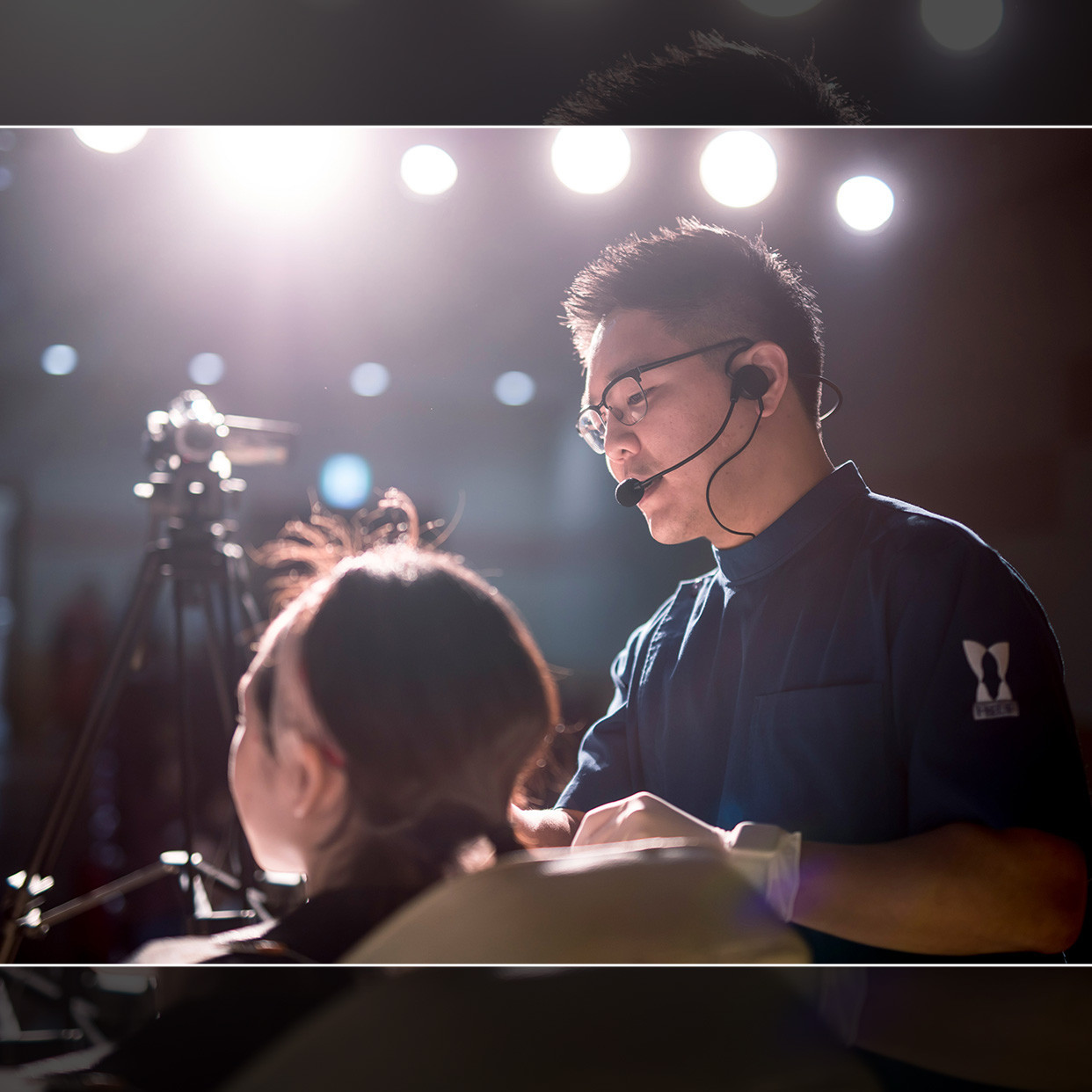
With an injectable like Rejuran, the result depends far more on injection depth, spacing and technique than on which box the product came out of — spread it unevenly and you get visible small bumps instead of smooth hydration.
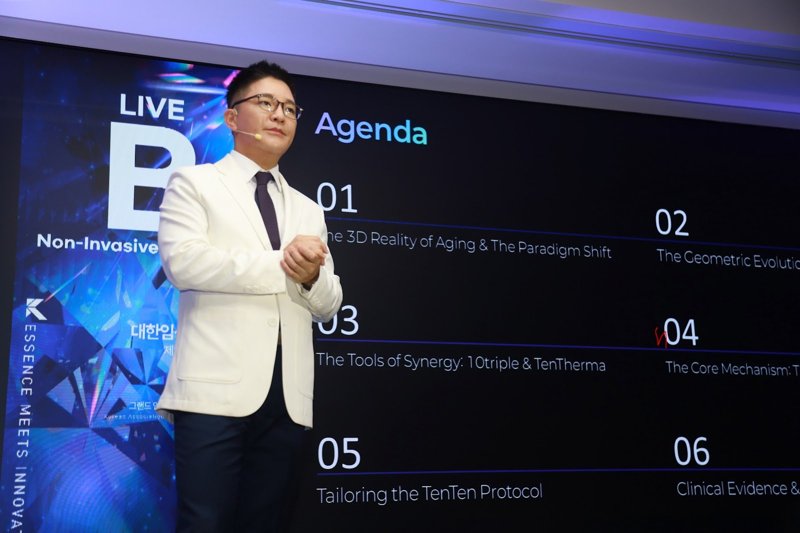
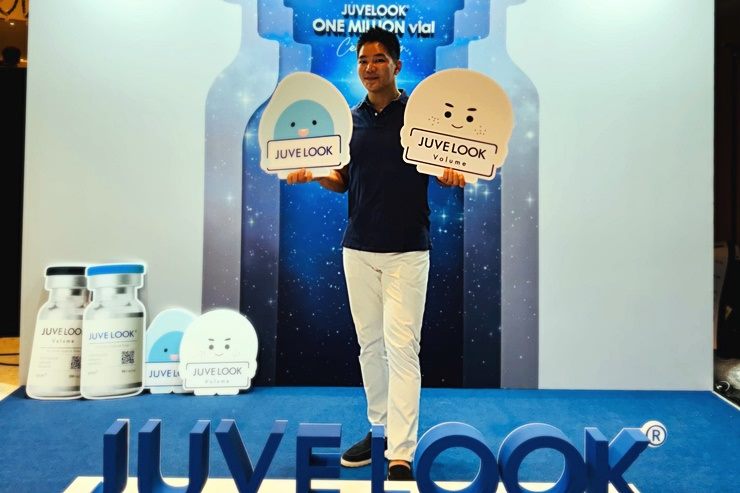
Gangnam Pieobom Clinic's Medical Director, Dr. Hyoseung Jang, graduated first in his class at Korea University College of Medicine and now serves as President of the Korean Medical Aesthetic Doctors Society and President of the Korean Association of Clinical Aesthetic Medicine. He is also the Founding Dean of S.M.A.R.T. Medical Academy, where he personally trains other doctors — Korean and international — in injection technique, and he holds Allergan's international JUVÉDERM Product Master certification alongside a Key Opinion Leader role for Vaim Global's Juvelook. You can read his full academic record on Dr. Jang's profile.
That training role matters for international patients specifically: Gangnam Pieobom Clinic regularly hosts visiting doctors from overseas for hands-on injection training, which means the clinic's day-to-day routine already runs on explaining technique clearly across a language gap — not improvising it the first time an English-speaking patient walks in.
None of that changes what Rejuran can or can't do. It does change how consistent and comfortable the injection itself is — which, for a treatment this dependent on technique, is most of what separates a good result from a disappointing one.
Fitting Rejuran into a short trip to Seoul
Because the improvement builds gradually as your skin responds, Rejuran is normally planned as a short course of sessions spaced several weeks apart, not a single visit. If you're only in Seoul once, a single session before you fly home is a reasonable start — many travelers do exactly that — but it's the beginning of a course, not the full result. Set that expectation before you book, not after you land.
Timing within the trip matters too. The mild redness and small bumps described above usually settle within a day or two, so most travelers prefer to schedule Rejuran earlier in a Seoul trip rather than the night before a flight — it gives your skin a day to calm down before you're back in photos, meetings or a long flight. If you're combining Rejuran with another treatment, such as a lifting device or a filler, we'll sequence the visits so recovery from one doesn't overlap awkwardly with the next.
Gangnam Pieobom Clinic is on the 3rd floor at 365 Gangnam-daero, directly in front of Gangnam Station Exit 5 — easy to fit into a trip built around the rest of Gangnam. See how to find us for directions, hours and what to bring to your first visit.
See it before you book
Dr. Jang's congress lectures and live injection demonstrations — including sessions at the Korean Association of Clinical Aesthetic Medicine and training for visiting international doctors — are published on the clinic's official YouTube channel, Petit Doctor. Most of it is in Korean, but if you want to see injection technique in action before deciding on a clinic, it's worth a look.
Watch on the Petit Doctor YouTube channel
Frequently Asked Questions
What's the real difference between Rejuran Healer and Rejuran HB Plus?
Healer is the broader, original formulation, generally spread across the face to work on overall hydration, dullness and texture. HB Plus is a different concentration intended for thinner, more delicate or more reactive skin and smaller, more targeted areas. Neither is simply "stronger" than the other — they are suited to different goals, which is why the choice is made after a consultation rather than by product name alone.
Is Rejuran a dermal filler?
No. Rejuran is a polynucleotide (PN/PDRN) injectable. It does not add volume or reposition tissue the way a hyaluronic acid filler does. It works on skin quality — hydration, elasticity and texture — by supporting the skin's own repair activity.
How many sessions of Rejuran do I need, and how far apart?
Most people are planned for a short course of sessions spaced several weeks apart rather than a single visit, because the improvement builds gradually as the skin responds. The exact number and interval depend on your skin condition and goal and are set at consultation.
Does Rejuran hurt, and what's the downtime?
Sensitivity varies by person. Mild redness and small, temporary raised bumps at each injection point are common in the first day or two and usually settle on their own. Please tell us if you are sensitive to pain or prone to bruising.
Is Rejuran FDA-approved, and does that matter if I'm having it done in Korea?
Rejuran is not currently approved by the US FDA for aesthetic use, which is part of why many people researching it from the US, UK, Canada and Australia are looking at where to travel rather than a clinic near home. When it is done in Korea, what matters is the product's Korean regulatory status and the experience of the medical team giving the injection.
Can I fit a Rejuran treatment into a short trip to Seoul?
Yes, with realistic expectations. A single session before you fly home is a reasonable start and many travelers do exactly that, but it is the beginning of a course rather than the full result. We can discuss a travel-friendly plan, including what to continue or repeat on a later trip, at your consultation.
Approval information for medical devices and drugs used in treatments can be checked on the Korean MFDS portals Medical Device Safety Korea and Drug Safety Korea.