A version of the same sentence comes up often in the consultation room: skin that has lost its firmness, looks duller than it used to, and shows fine lines that weren't there a year or two ago. It's rarely one problem on its own — it's three or four, stacked on top of each other, which is exactly why surface-level skincare or a one-off shot of volume doesn't hold. None of that rebuilds the structure actually holding the skin up.
That's the gap GOURI, Juvelook and Rejuran are all trying to close, each from a different angle — which is exactly why the next question I get asked is: "okay, so which one is actually mine?" This article answers that directly, using the GOURI skin booster — a liquid PCL (polycaprolactone) collagen stimulator developed in Korea — as the starting point.
What GOURI actually is: Korea's liquid PCL approach
Compared with the microparticle formulations used in Juvelook, the viscous liquid used in Rejuran, or the cross-linked gel used in standard fillers, GOURI's defining feature is that it is a fully liquid formulation — no particles at all.
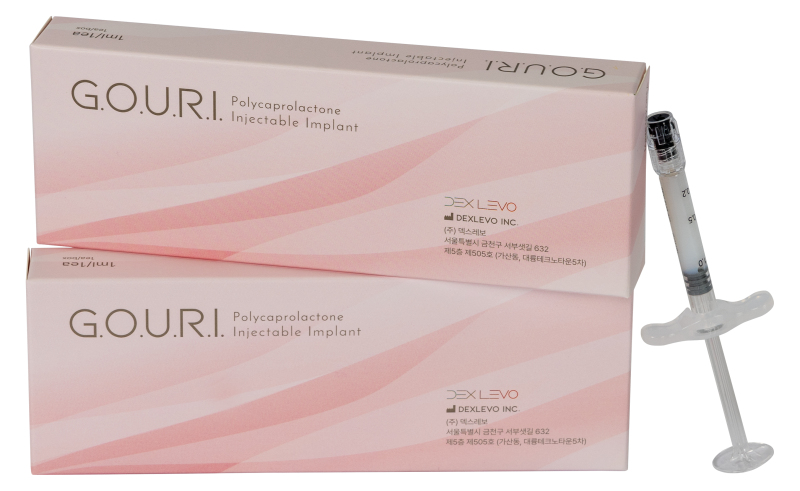
Particle-based formulations carry some risk of pooling or settling unevenly in one spot after injection. A fully liquid formulation like GOURI, by contrast, has no microparticles to clump — it absorbs into the skin quickly and spreads evenly once injected.
That structural difference is not just a technical detail. It is the reason GOURI is described as a collagen-production "switch" rather than a physical filler: instead of occupying space the way a standard filler does, it is intended to prompt the skin's own fibroblasts to rebuild collagen from within.
What makes it different from Juvelook and Rejuran
Which option suits you depends on your skin concern and your goal, so understanding your own skin condition matters more than comparing ingredient names in the abstract.
| Category | Filler | Rejuran Healer | Juvelook | GOURI |
|---|---|---|---|---|
| Ingredient / formulation | Cross-linked HA (gel) | PN (viscous liquid) | PDLLA (microparticles) | PCL (fully liquid) |
| Main purpose | Local volume filling | Improving skin texture / epidermal environment | Local volume / firmness by area | Overall facial tightening & collagen regeneration |
| Features | Immediate contour volume | Hydration and barrier strengthening | Particle-based cell stimulation | Minimal nodule concern / excellent spread |
Put simply: GOURI spreads to work on the dermis broadly, Juvelook concentrates in a targeted spot, Rejuran Healer works mainly on the surface and texture, and filler adds immediate physical volume. None of the four is a strict upgrade over the others — they solve different problems.
Expected effects, and how long they take
Because it is a liquid formulation, absorption into the surrounding tissue after injection is relatively quick. Mild swelling or small injection marks can appear right away, but these usually settle within 1 to 3 days, so most people return to daily life immediately.
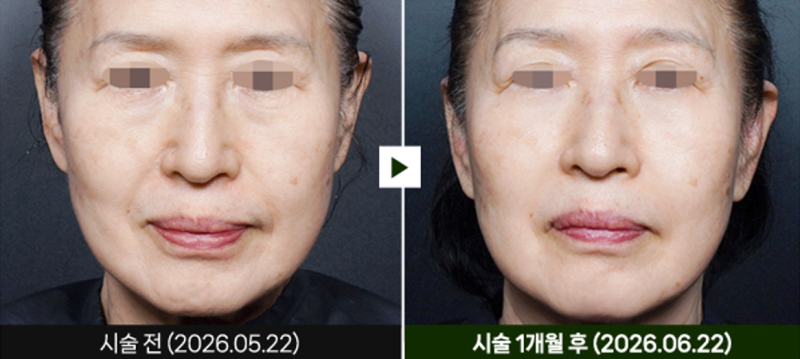
GOURI is not a one-session treatment. A course of about 3 sessions spaced 4 weeks apart is typical. Visible change builds gradually rather than appearing overnight: as collagen remodeling in the dermis progresses over the following weeks, skin density, firmness and surface texture improve together. The newly formed collagen is described as keeping skin firm and smooth for one year to one and a half years or longer, though individual results vary.
In terms of what to expect rather than just when: the two effects most people notice first are an overall tightening and smoother texture across the treated area, and a reduction in the dullness that comes with lost dermal density — rather than a dramatic, immediate volume change, which is a different kind of result that filler or Juvelook is better suited to.
Who GOURI is recommended for
Based on how it works, GOURI tends to be recommended for:
- Skin that has lost firmness and looks like it's starting to sag
- Fine, fairly shallow wrinkles rather than deep static lines
- Rough or uneven overall skin texture
- Thin, delicate areas such as under the eyes or the forehead, where particle-based products have traditionally been riskier to use
It's a less efficient choice if what you actually want is immediate, concentrated volume in one specific hollow area — a deep tear trough or a flattened cheek, for example. In that case Juvelook or a filler will usually get you there faster, and we'd rather point you there directly than sell a broad-spread treatment for a narrow, localized problem.
GOURI, Juvelook or Rejuran: how to choose, and what pairs well
In the consultation room, this usually comes down to three quick questions:
If you want volume concentrated in one specific area, a precision-targeted skin booster like Juvelook is usually the more efficient option. If you want fast improvement in surface texture and calming, something in the Rejuran Healer family tends to give a more intuitive, quicker-feeling result. If you want immediate, physical three-dimensional volume, a filler remains the faster answer.
GOURI's own strength sits in between those: broad, even collagen density across the whole treated area, with a long-lasting effect because it works through regeneration rather than filling.
In practice, many patients don't choose just one. A common combined plan pairs GOURI for overall dermal firmness with Rejuran for surface texture, or with Juvelook for a specific hollow area that needs more concentrated volume than GOURI alone would give it. The right order and interval between treatments should be set with your doctor based on your skin, not decided in advance from a product comparison chart — including this one.
Why precision technique matters with a high-diffusion liquid
Because GOURI can be used across so many areas, the procedure itself calls for a more careful, meticulous approach than its simplicity on paper suggests. Its biggest strength — excellent diffusion and fluidity — is also the thing that makes technique matter so much: handled carelessly, it can spread into surrounding tissue the patient never intended to treat, diluting the concentrated effect exactly where it was needed most.
① Personalized diagnosis
Skin thickness, elasticity, dermal depth and even how your expression muscles move day to day are analyzed together before any plan is set.
② Combined solution design
If deep, localized hollowing is the main concern, combining Juvelook or a filler alongside GOURI, and if hydration and surface texture matter more, combining Rejuran, tends to give a more efficient result than GOURI used alone.
One-to-one design at Gangnam Pieobom Dermatology Skin Clinic
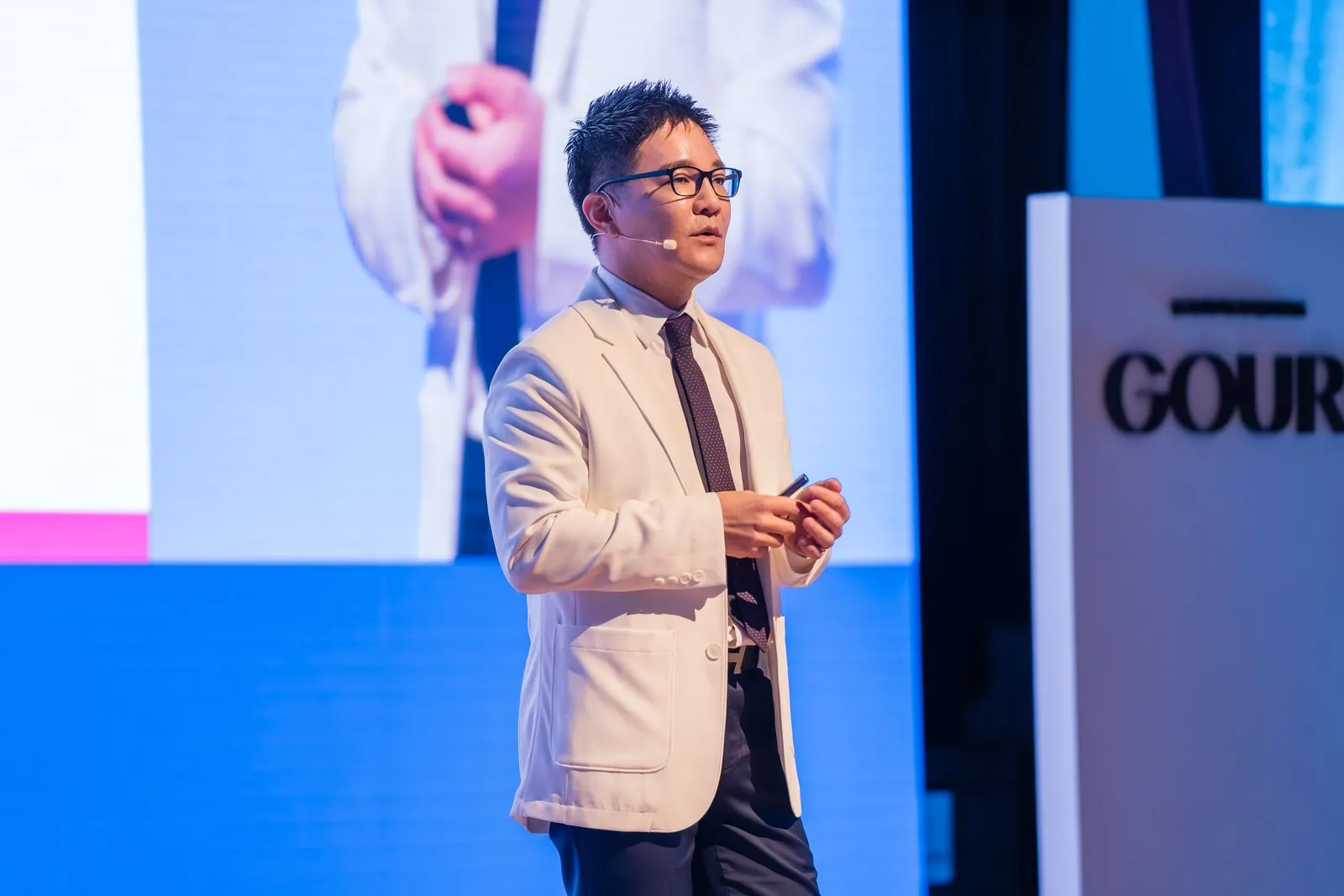
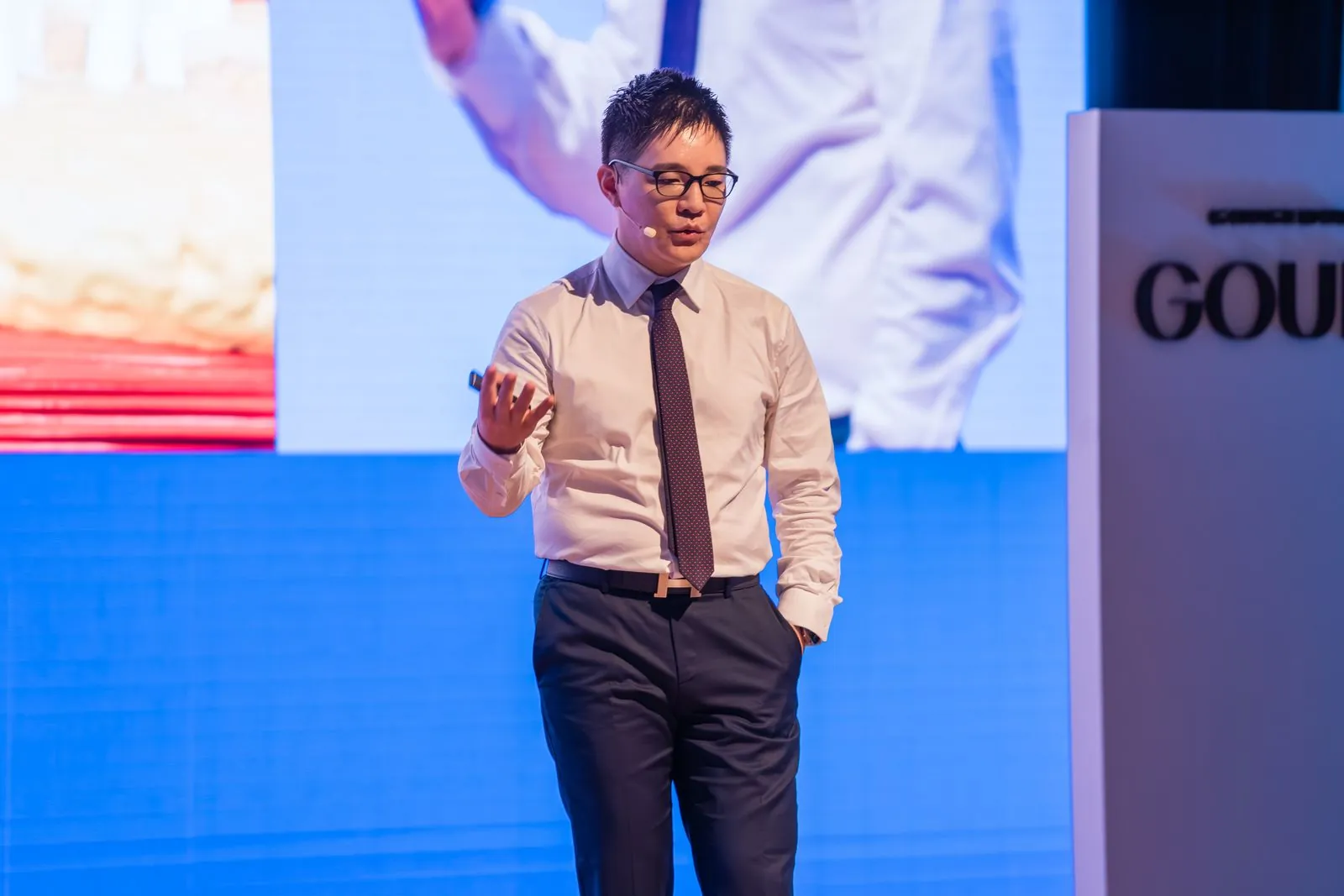
At Gangnam Pieobom Dermatology Skin Clinic, Dr. Hyoseung Jang, who serves as President of the Korean Association of Clinical Aesthetic Medicine, personally oversees the entire process, from consultation through to treatment.
After carefully analyzing your skin thickness, stage of aging, fat distribution and individual goals through one-to-one consultation, a one-to-one personal design is built around your skin specifically — not a standard protocol applied the same way to everyone.
A difference in experience shows up directly as a difference in results. A liquid PCL treatment requires careful calculation of how the formulation will diffuse and at what depth it should be placed in each skin layer, so it's worth proceeding with a medical team that has real clinical know-how with this specific formulation, not just injectables in general. You can read more about Dr. Jang's academic background on his profile.
Frequently Asked Questions
Is GOURI better than Juvelook or Rejuran?
Not universally — each is built for a different job. GOURI is generally better for broad, overall firmness and texture across the face. Juvelook tends to work better when you want volume concentrated in one specific area. Rejuran Healer tends to work better when the main goal is fast surface-texture renewal. Many patients combine two of these rather than choosing only one, decided together with a doctor based on their skin.
How long do bruising, swelling and downtime last after GOURI?
Because it is a liquid formulation, absorption into the skin tissue after injection is relatively quick. Slight swelling or injection marks may appear right after treatment, but they usually settle naturally within 1-3 days, so you can return to daily life right away.
How many sessions are recommended, and how long do results last?
About 3 consecutive sessions at 4-week intervals are usually recommended. Collagen remodeling in the dermis proceeds gradually after treatment, and the newly formed collagen is described as keeping the skin firm and smooth for one year to one and a half years or more. Individual results vary.
Is there really no risk of nodules (clumping) after GOURI?
Unlike existing PCL/PLLA treatments that contain particles, GOURI is a fully dissolved 'liquid' formulation. The risk of nodules or granulomas caused by particle clumping is therefore described as considerably lower, and it is well regarded for safety. This does not mean the risk is zero, and results vary by individual.
Can it be used safely on thin-skinned areas such as around the eyes or the forehead?
Yes, it is possible. One of GOURI's biggest strengths is its excellent diffusion and softness. It blends naturally into the dermis without showing through, the Tyndall effect or a floating feeling, so it is also used for fine lines around the eyes and for forehead firmness.
Can GOURI be combined with other skin boosters or lifting?
Yes, combining may offer a complementary effect. For example, a combined plan is possible in which skin-surface texture is refined with Rejuran and overall dermal firmness is addressed with GOURI. The interval and order of treatments should be decided after consulting your doctor, depending on your skin condition.
Approval information for medical devices and drugs used in treatments can be checked on the Korean MFDS portals Medical Device Safety Korea and Drug Safety Korea.