한국어
 繁體中文
 简体中文
 日本語
 ไทย

Many factors shape a first impression, and the eye area has a big influence on the overall mood and impression of the face. Hollow or shadowed under-eyes can make you look tired even after enough rest, or older than your age.
The under-eye area in particular has thin skin and little subcutaneous fat, so even small changes from aging show up relatively easily. Under-eye hollows can result from changes in under-eye fat, reduced skin firmness and bone structure, and these changes can make dark circles or under-eye wrinkles look more pronounced.
As more people worry about under-eye hollows, interest continues not only in simply filling lost volume but also in PLLA-based treatments that aim to induce collagen formation within the skin.
One of them, Olidia, is an injectable that uses PLLA to induce collagen production, and it can be considered for improving volume and firmness depending on skin condition. However, because the under-eye needs a more delicate approach than other facial areas, it is important to fully understand the principle and characteristics of Olidia for under-eye hollows treatment.
Under-eye hollows treatment: start with the anatomical causes
Under-eye hollows cannot be explained simply as a loss of volume within the skin. As aging progresses, skin collagen and firmness decline, and the fat and soft tissue around the eyes also change.
When the structures that support under-eye fat weaken or the position of the fat changes, one area can look protruding while the area below looks relatively hollow. Depending on the anatomy of the tear-trough area and the characteristics of the bone structure, under-eye hollows can also be prominent at a relatively young age.
These changes can cast a shadow beneath the eye that looks like dark circles. However, dark circles can arise from various causes such as pigmentation or visible blood vessels, so they should be distinguished from shadowing caused by under-eye hollows.
So when considering a satisfying under-eye hollows treatment, the process should begin with a comprehensive look at skin thickness and firmness, the distribution of under-eye fat and the depth of the tear trough, rather than focusing only on filling the hollow area.
Olidia: how does PLLA work?
One method considered for improving under-eye hollows is a collagen-inducing treatment that uses PLLA (Poly-L-Lactic Acid).
PLLA is a biodegradable polymer that, after being injected into skin tissue, is described as inducing new collagen formation through the reaction of surrounding tissue. Olidia for the under-eye is also a product based on PLLA and works differently from conventional hyaluronic acid fillers.
| Category | Regular hyaluronic acid (HA) filler | Under-eye Olidia (PLLA) |
|---|---|---|
| Main ingredient | Cross-linked hyaluronic acid (HA) | PLLA (Poly-L-Lactic Acid) |
| How it works | Physically fills with the volume of the injected material itself | Induces the body's own collagen synthesis through the reaction of surrounding tissue |
| When effects appear | Immediate volume change right after treatment | Gradual, natural volume over time |
| When used around the eyes | Caution about the Tyndall effect or a heavy look if overinjected | Collagen remodeling in the dermis and deeper layers through precise injection |
Whereas hyaluronic acid fillers produce a relatively immediate volume change through the bulk of the injected material itself, PLLA makes use of a collagen-forming reaction that develops over a period of time.
It is therefore necessary to distinguish the temporary change in volume right after treatment from the change that comes from actual collagen formation. Changes from PLLA can appear gradually, and their degree and timing vary with the individual's skin condition and tissue response.
In thin-skinned areas such as the under-eye in particular, a careful approach that takes these characteristics into account is needed. If PLLA particles are injected in an inappropriate position or concentrated in one spot, nodules or surface irregularities can occur. Not every PLLA product is equally suitable for the under-eye area, so it is important to check each product's approved indications and the suitability for the treated area.
Why eye-area anatomy matters so much
The under-eye is an area of the face with thin skin where blood vessels, muscle, fat and other structures lie close together. Applying the same method used in other areas to the under-eye may therefore not be appropriate.
Around the eyes in particular there are the orbicularis oculi muscle, the orbital septum, under-eye fat and various vascular structures, and skin thickness and tissue characteristics also differ between individuals.
If injection is done without fully considering this anatomy, surface unevenness, nodules, swelling or asymmetry can occur. Although rare, the possibility of serious complications such as vascular injury or vascular occlusion from injection treatments must also be considered.
In a safe under-eye hollows treatment, it is therefore more important to understand the anatomical characteristics of the treatment area and carefully decide the injection position and method suited to the product than to simply increase the injected amount. If the cause of the hollows is structural, such as protruding fat or skin laxity, injection alone may not give enough improvement, so suitability with other treatment methods should also be reviewed.
Olidia: safe treatment approaches covered at the academic lecture
In under-eye PLLA treatment, not only the product's characteristics but also an understanding of eye-area anatomy and a refined injection approach are treated as important.
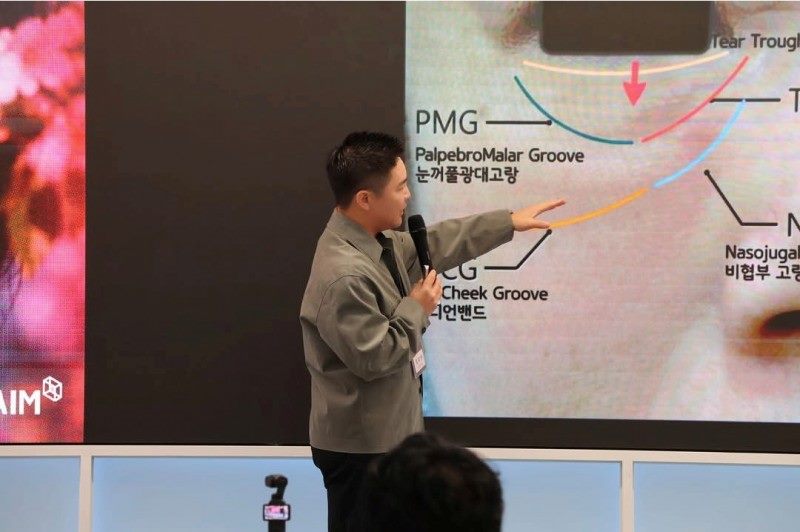
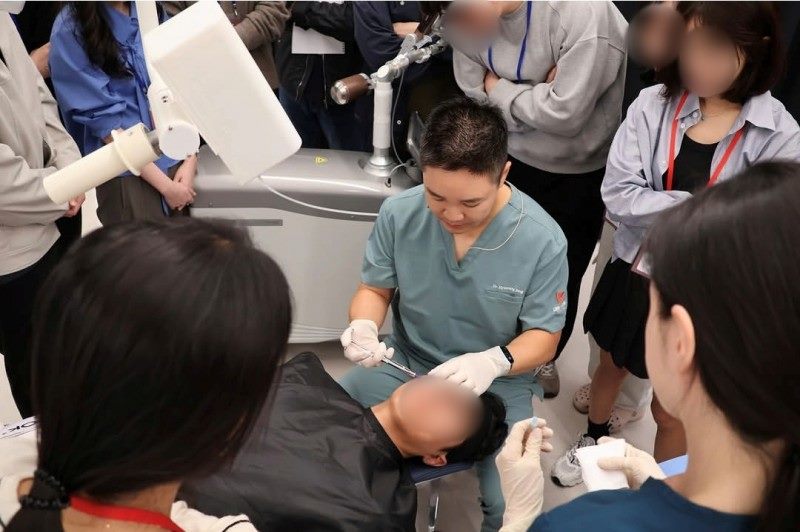
In this regard, Dr. Hyoseung Jang of Gangnam Pieobom Clinic attended the 'Korean Association of Clinical Aesthetic Medicine S.M.A.R.T Academy' as a speaker and gave an academic lecture and live demonstration on PLLA treatment around the eyes.
At this academic event, the topic 'Anatomical Theory and Safe Approaches for Periocular PLLA Treatment' covered the anatomical characteristics of the eye area and points to consider during treatment. This was followed by 'Safe Injection of Olidia PLLA Around the Eyes and Micro-Volume Demonstration', which introduced the actual application process and a detailed injection approach for eye-area PLLA treatment.
Because even a small volume change around the eyes can alter the impression of the face, a refined treatment plan that takes anatomy into account is important. This lecture was an occasion to share clinical knowledge on how to apply PLLA and on safe treatment approaches, based on the particular nature of eye-area treatment.
Through academic activity in Korea and abroad, Dr. Hyoseung Jang exchanges clinical experience and medical knowledge on a variety of aesthetic procedures and researches more refined, careful treatment approaches.
Olidia: when do effects appear and how many sessions are suggested?
When considering PLLA treatment, many people wonder when changes appear and how many sessions are needed. Unlike methods in which the injected material forms volume immediately, PLLA tends to induce gradual change through a collagen-forming reaction.
The point at which change appears therefore varies with the individual's skin condition and tissue response, the product used and the treatment method, and progress is generally observed over a period of time.
The number of sessions also cannot be the same for everyone. The need for additional sessions should be judged by considering the degree of under-eye hollowing, skin thickness, tissue condition and previous treatment history.
The under-eye can react sensitively even to a small change, so caution is needed about injecting a large amount in a short time or applying a fixed number of sessions uniformly. Above all, if you are considering Olidia for the under-eye, it is more important to fully assess the characteristics of your eye-area tissue and your individual suitability than to focus on the number of sessions or immediate volume change.
Aftercare and precautions for a good outcome
Because the under-eye is thin and sensitive, careful care is needed after treatment as well.
Right after treatment, temporary redness, swelling, bruising or tenderness may occur at the injection site, and most of it can ease with time. The degree of symptoms and recovery time differ between individuals.
After treatment, follow your doctor's guidance and avoid activities that can increase swelling and irritation, such as alcohol, saunas and strenuous exercise, for a period of time. Also avoid pressing the treated area hard or massaging it on your own. Aftercare instructions for PLLA products can differ by product and method, so it is important to follow your doctor's guidance.
In particular, if a firm nodule can be felt or swelling persists after some time, the condition should be checked by a doctor. If severe pain, skin color change or vision problems occur right after treatment, seek medical evaluation immediately. A proper under-eye hollows treatment must consider not only the procedure itself but also follow-up observation and care afterward, so it is advisable to fully review the expected changes and precautions beforehand.
Olidia: a personalized approach for natural eye-area change
Under-eye hollows are not a problem that can be solved simply by filling lost volume, because various causes act together, including reduced skin firmness, fat distribution, tear-trough structure and changes in surrounding tissue.
To improve under-eye hollows, it is therefore important to identify the individual's facial structure and skin condition accurately and choose a suitable treatment method. PLLA-based treatments such as Olidia for the under-eye also have the characteristic of inducing collagen formation, but they are not applicable to every case of under-eye hollowing. Whether to proceed should be decided only after fully reviewing the product's approved scope, the individual's anatomical characteristics and possible side effects.
Gangnam Pieobom Clinic values personalized care that considers each person's skin condition and facial structure. Dr. Hyoseung Jang continues academic activity and the exchange of clinical experience, including the academic lecture and live demonstration on periocular PLLA at the Korean Association of Clinical Aesthetic Medicine S.M.A.R.T Academy.
What matters in under-eye hollows treatment is not simply filling the hollow area, but understanding eye-area anatomy and skin characteristics and carefully choosing the method that suits the individual.
Gangnam Pieobom Clinic will keep examining each patient's characteristics carefully, based on steady research and academic exchange, and do its best to provide safer, more refined care.

Frequently Asked Questions
When do results appear after under-eye Olidia?
Unlike ordinary injectables that fill with material immediately, PLLA gradually induces the body's own collagen synthesis. After the slight fullness from the aqueous solution right after treatment is absorbed, collagen forms gradually over roughly 2-4 weeks, and many people experience the eye area becoming firmer and fuller. Individual results vary.
How many sessions are needed for a successful under-eye hollows treatment?
It depends on each person's degree of under-eye hollowing, tear-trough depth and skin thickness. Rather than injecting a large amount in a short time, completing the treatment through 2-3 careful sessions, injecting small amounts and observing progress, tends to look most natural and helps minimize the risk of nodules.
What aftercare precautions should I follow after treatment?
Slight temporary swelling, redness or bruising may occur right after treatment but usually eases naturally. For a week afterward, avoid alcohol, saunas and strenuous exercise, and take care not to rub the injected area hard or massage it on your own.