한국어
 繁體中文
 简体中文
 日本語
 ไทย

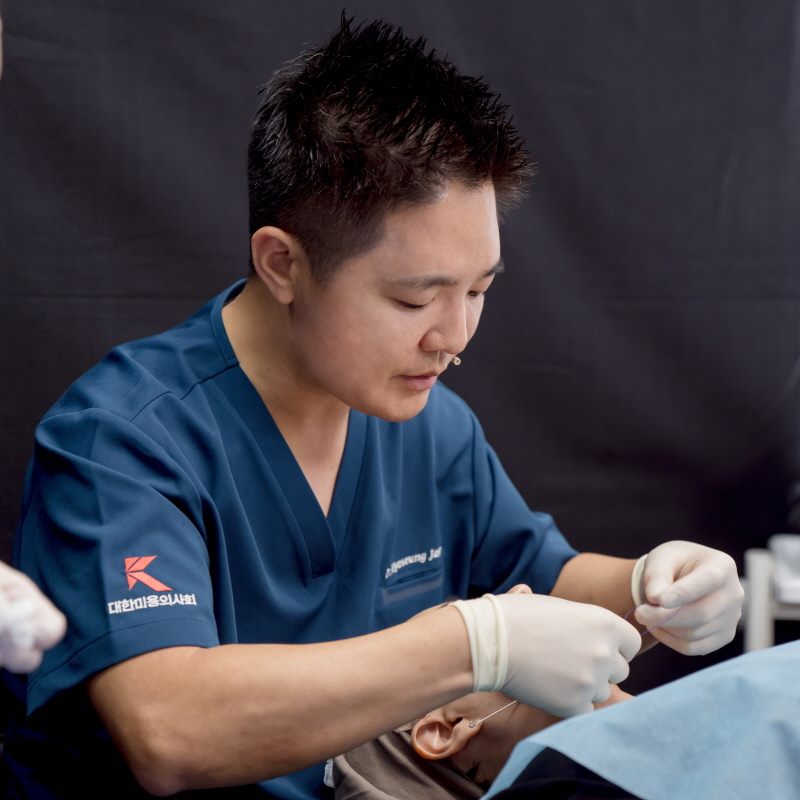
Reduced facial firmness, wrinkles and sagging are natural changes of aging. Among the many lifting treatments for these changes, thread lifting continues to draw attention as a method that physically supports and lifts sagging tissue without a skin incision.
Recently in particular, the focus has moved away from simply pulling the skin hard toward the importance of refined lifting design that also considers each person's facial structure, skin thickness, fat distribution and the direction of tissue sagging.
Thread lifting is characterized by a relatively short treatment time and little incision burden, but it is not a treatment that can be applied the same way to everyone. Results can vary with the characteristics of the thread, the insertion position and the pulling direction, and excessive tension can cause surface irregularities, asymmetry or an unnatural contour.
For a satisfying result, it is therefore important to carefully analyze the facial anatomy and skin condition before treatment and to set up an appropriate treatment plan.
How thread lifting characteristics vary by thread type
Medical threads used in thread lifting are classified into many types by material, shape, barb structure and the way they support tissue. Biodegradable materials such as PDO, PLLA and PCL are commonly used, and the rate at which they break down in the body and their physical properties differ by thread type.
Cog threads with barbs are used to hook, support and pull sagging tissue, while spring-shaped threads are sometimes used to support tissue in specific areas thanks to their elasticity and flexibility. Threads with a cone-shaped structure aim to produce a lifting effect by supporting and repositioning tissue.
| Category | Cog thread | Spring thread | Cone-shaped thread |
|---|---|---|---|
| Structural characteristics | Structure with barbs (cogs) | Elastic spring shape | Cone-shaped structure |
| Main action | Hooks, supports and pulls sagging tissue | Supports tissue with flexible elasticity | Supports tissue and repositions the contour |
| Points to note when applying | Matched to skin thickness and tissue weight | Suited to thin areas with a lot of movement | Three-dimensional contouring and volume repositioning |
The important point is that no single thread suits every face. In thin skin, excessive tension can make the thread outline visible or make the skin surface irregular, while in thick tissue with marked sagging it can be hard to secure enough support. Rather than choosing by thread thickness or strength alone, the right thread should be chosen by considering skin thickness, tissue weight and the degree of sagging together.

Insertion direction and anchoring position matter more than thread count
One thing many people ask when considering thread lifting is 'how many threads should be used'. However, the number of threads is not the only factor that determines the result. Even with the same number of threads, the lifting pattern can differ with the insertion depth and direction and the position where the tissue is anchored.
The face in particular has skin, subcutaneous fat, fascia, retaining ligaments and other anatomical structures connected in a complex way, so it is important to identify precisely the cause and direction of sagging. Inserting many threads or pulling hard without considering facial asymmetry, fat distribution and skin firmness can instead lead to an unnatural result.
It is therefore important to set the insertion path and anchoring points suited to each person's facial structure and to adjust the tension appropriately within the necessary range.
A refined lifting strategy highlighted at an international lecture
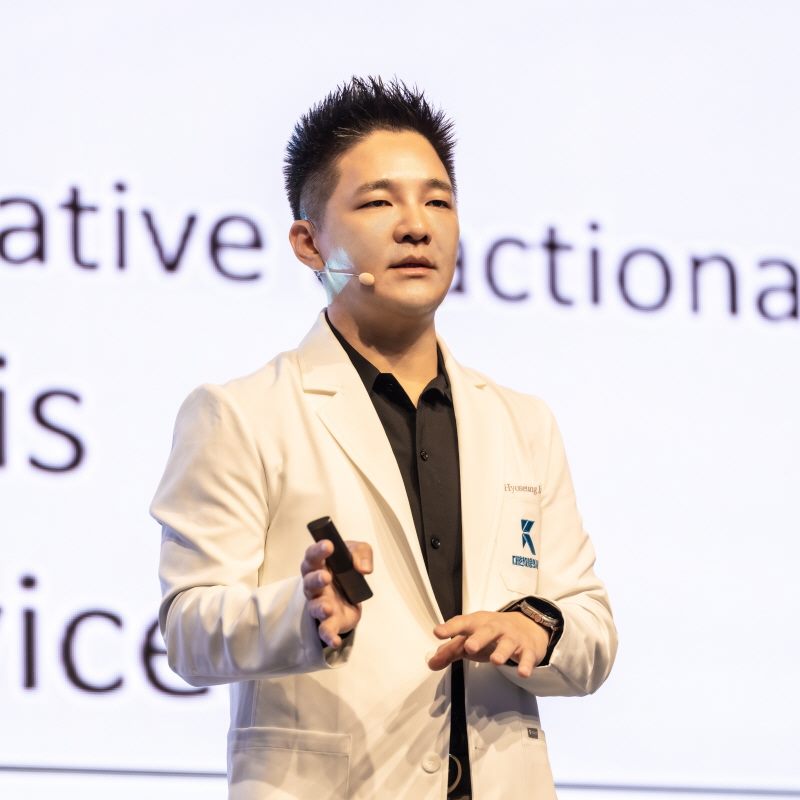
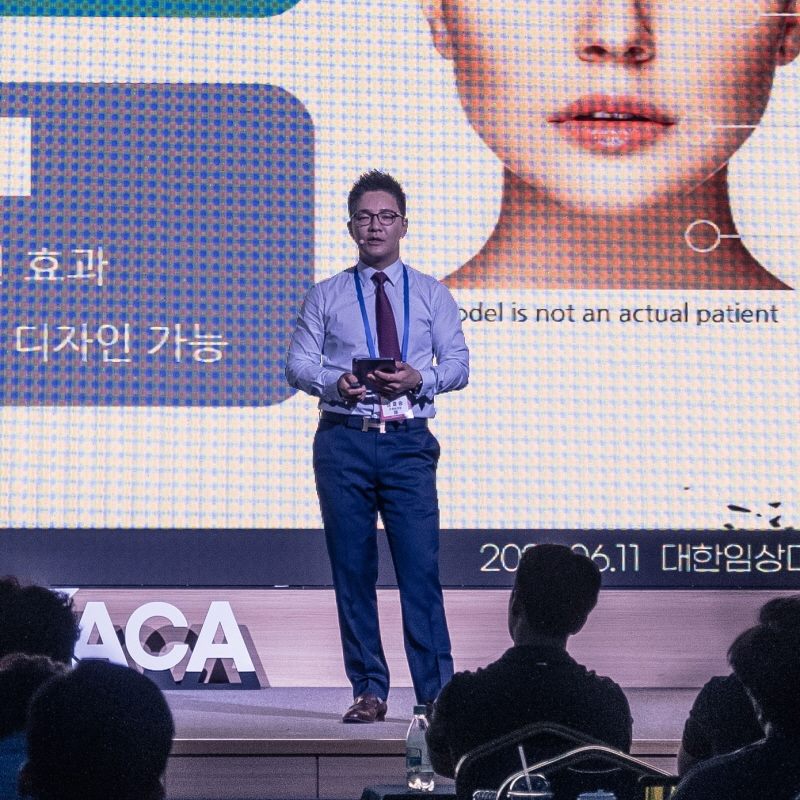
Dr. Hyoseung Jang of Gangnam Pieobom Clinic attended the 'i-THREAD K-Club Opening Ceremony & Lecture' held in Bangkok, Thailand, as a speaker and gave a lecture on combined treatment strategies to maximize the effect of thread lifting.
The lecture topic was 'Maximizing i-THREAD Efficacy: Lateral Reverse Lifting and SMAS Anchoring with Micro-Volume HA Detailing', covering lateral reverse lifting, SMAS anchoring techniques and refined contour design using small amounts of hyaluronic acid (HA).
The content focused on building a more detailed lifting strategy that considers facial anatomy and the direction of tissue support, rather than approaching thread lifting as a procedure that simply pulls sagging skin. In particular, the SMAS (superficial musculoaponeurotic system) is an anatomical structure closely connected to the soft tissue of the face and is one of the key elements for understanding lifting procedures.
For some contour or volume changes that are hard to improve with lifting alone, a complementary approach using a small amount of hyaluronic acid may be considered depending on the individual's condition. However, such combination treatment is not needed for every patient, and an accurate judgment based on anatomy, treatment area and tissue condition must come first. This international academic lecture was a meaningful occasion to share not only the effects of thread lifting but also the importance of refined treatment design and anatomical understanding.

A personalized approach for natural results
What matters in thread lifting is not simply lifting sagging tissue as much as possible, but keeping a natural balance that respects each person's facial proportions and contour. Even within the same age group, skin thickness and firmness, fat distribution, facial skeleton and aging patterns all differ.
Before treatment, it is therefore necessary to check the condition of the skin and soft tissue through a thorough consultation and to determine the areas needing improvement and the appropriate lifting direction. After treatment, temporary swelling, bruising, tightness or a foreign-body sensation may occur, and complications such as infection, thread exposure or asymmetry can appear rarely, so aftercare is also important.
The duration of thread lifting also varies with the thread material, treatment method, individual skin condition and lifestyle, so it is advisable to understand realistic expectations and limits through a thorough consultation.
Gangnam Pieobom Clinic's ongoing research and academic exchange
Gangnam Pieobom Clinic values personalized care that considers each person's facial structure and skin condition over a one-size-fits-all approach. Dr. Hyoseung Jang continues to broaden medical understanding of thread lifting and to research more refined treatment directions, drawing on academic activity in Korea and abroad and clinical experience.
The i-THREAD K-Club academic lecture in Bangkok, Thailand, is also part of this research and academic exchange.
Thread lifting cannot be judged simply by which thread is used or how many are inserted. Understanding of facial anatomy, appropriate thread selection, precise insertion direction and tension control, and the clinical judgment of the medical team must all be considered together.
Gangnam Pieobom Clinic will keep raising its expertise through continued research and academic exchange, and do its best to provide safe, careful medical care suited to each patient.
Frequently Asked Questions
Is it better to use more threads in thread lifting?
No. More important than the number of threads are the accurate insertion depth, anchoring position and appropriate tension control matched to the individual's skin thickness and direction of sagging. Simply inserting many threads can instead create unnecessary foreign-body sensation or an awkward contour.
What side effects or precautions should I know about after treatment?
Temporary swelling, bruising, tightness or a foreign-body sensation may occur, and infection, thread exposure or asymmetry can appear rarely. After treatment, avoid opening your mouth very wide or rubbing the treated area hard.
How long does thread lifting last?
It can vary with the thread material (PDO, PLLA, PCL and so on), the treatment method, the individual's skin condition and lifestyle, so it is advisable to understand realistic expectations and limits through a thorough consultation.