한국어
 繁體中文
 简体中文
 日本語
 ไทย

Hello. I am Hyoseung Jang, head physician of Gangnam Pieobom Clinic.
The field of medical aesthetics has advanced rapidly over the past several years. With botulinum toxin and fillers joined by a wide range of energy-based devices and skin-improvement treatments, a far more finely tailored approach is now possible.
Yet the more varied treatments and technologies become, the more there is that I, as a physician, think about deeply. It is the question of whether a change made today will still be an appropriate choice for the patient as time passes.
In a recent interview with Health Joongang, I spoke about sustainable beauty and the essence of medicine, drawing on these concerns.

How the Standard of Beauty Changes With Time
Having run the clinic for nearly 15 years, I have had the chance to watch a single patient change over a long period.
Someone who first had botulinum toxin or filler in their early twenties may, as time passes, go through pregnancy and childbirth and changes in weight and facial contour, and now turn their attention to managing natural aging.
Even for the same person, the face in the 20s differs from the face in the 40s, and so does the direction of beauty they pursue at each stage. This is not simply because of skin aging. It is because many factors act together: changes in the soft tissue surrounding the skeleton, the distribution of fat, the movement of muscles, skin elasticity and more.
Therefore, rather than judging a cosmetic treatment only by the concern that shows today, we need to look at the person's anatomical characteristics and how they may change over time.
I believe the role of a physician is not just to create an outward change at a particular moment, but to set a suitable direction together with the patient in step with their life and bodily changes.
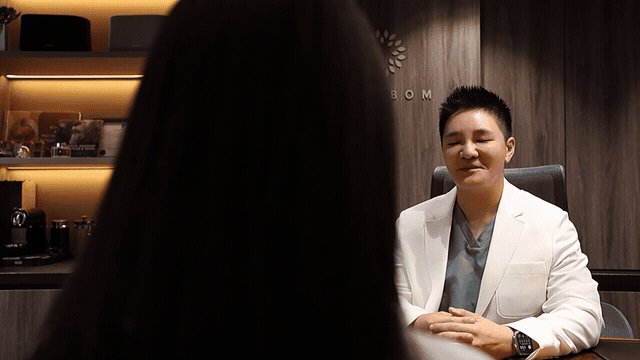
The Quality of a Treatment Begins With Sound Judgment, Not Quantity
As my clinical experience has grown, so has the standard by which I look at treatments. In the past I focused on actively delivering the change a patient wanted; now I look more closely at whether the change is truly needed, whether it harmonizes with the current face, and whether it is appropriate in the long run.
Filler and botulinum toxin are typical examples. With repeated filler treatments, people who grow used to their changed appearance sometimes want even more volume. But adding volume to one area does not necessarily improve the harmony of the face as a whole.
Likewise, increasing the dose of botulinum toxin does not always bring a better result. The size and movement of the muscle, its relationship with surrounding tissue and the purpose of the treatment must all be considered together.
| Category | Short-term, commercial approach | Gangnam Pieobom Clinic's long-term approach |
|---|---|---|
| Basis for deciding on a treatment | Focus on immediate visible change and added volume | Priority on anatomical harmony of the whole face and long-term appropriateness |
| Dose and guidelines | Large amounts given in response to a patient's momentary request | Measured, restrained treatment that takes muscle and tissue condition into account |
| Role of the medical team | Accepting a one-off purchase request and simply performing the treatment | Professional advice that includes recommending against a treatment when appropriate |
Having treated patients over many years, I have confirmed that it matters to receive the right treatment at the right time, and, when further treatment is unnecessary, to leave a sufficient interval and observe how things progress.
Deciding when not to treat is as much a part of a physician's expertise as deciding what to treat and how much.
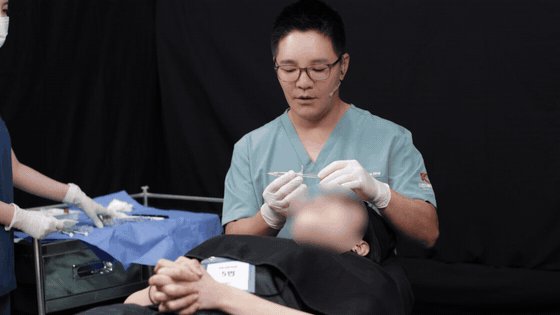
At Its Core, Medical Aesthetics Is Medicine
Aesthetic medicine aims at outward improvement, but at its foundation there must be a medical understanding of the structure and function of the human body. The face is a complex structure in which skin, subcutaneous fat, muscles, ligaments, bone and more influence one another.
Wrinkles or volume loss that look alike on the surface can have different underlying causes, and the suitable treatment method and scope of approach differ accordingly. New treatments and advances in medical technology are certainly a positive change. But a treatment cannot be applied the same way to every patient simply because it is in fashion.
A physician must thoroughly understand the principle and anatomical characteristics of a treatment and weigh the expected effects, limits and possible side effects together. The same goes for choosing products. For medicines such as botulinum toxin in particular, it is necessary to look at how much clinical data has accumulated, safety, approved indications and experience of use in actual practice.
A product should not be judged on personal experience alone, nor can objective evidence alone predict every individual patient's response. In the end, what matters is making balanced use of clinical evidence and the physician's experience. I believe that for advances in medical technology to lead to meaningful results for patients, judgment about safety and appropriateness must always come first.
Thinking About Sustainability Beyond the Consulting Room
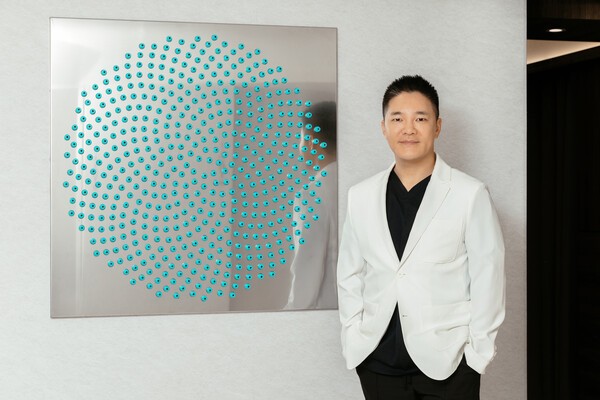
My interest in sustainable beauty naturally extended to thinking about the relationship between medical practice and the environment. I am now in my third year of taking part in Allergan Aesthetics Korea's 'Beauty Up Campaign'.
The Beauty Up Campaign is a social contribution initiative that turns empty botulinum toxin vials, which would otherwise be discarded after use, into upcycled works of art and channels the proceeds from selling them into donations. At first, the idea that empty vials used in a medical setting could be reborn as art felt somewhat unfamiliar.
But as I experienced for myself how the works were made and exhibited, the way I look at the resources generated in a medical setting changed too. What impressed me was that even waste produced in everyday practice, approached from a new perspective, can become a medium that raises awareness of the environment and conveys social value.
It felt all the more meaningful that the donations raised through the works go to help pediatric patients. This connects with the values of naturalism and humanism that I have held important in running Pieobom. For the medical aesthetics industry to keep developing, we need to think not only about the effect and technical polish of treatments, but also about the resources used in the course of care and the impact we leave on society.

Care That Looks Ahead to 1, 5 and 10 Years From Now
There is something I often tell my patients: I hope they will not see cosmetic treatment merely as a one-off purchase of a service they need at the moment.
A person's face and body keep changing, and the direction of care they need changes accordingly. Whether a change that satisfies you now will still be right in a few years, whether repeated treatment is needed, or whether it is better to maintain the current state should be judged from a long-term perspective.
So rather than choosing a treatment on price or trends alone, it helps to build a relationship with a medical team who can fully understand your physical characteristics, your treatment history and how you may change in the future, and who you can talk things through with. For their part, physicians should not accept a patient's request unconditionally; they should propose a suitable direction based on medical judgment and be able to advise against a treatment when necessary.
A clinic is a place that provides medical services and, at the same time, a medical institution responsible for patients' health and safety. Never forgetting that essence matters above all.
Sustainable beauty, as I see it, is not simply keeping a youthful look for a long time. It is the process of understanding natural change over time and pursuing healthy beauty by continuing to make choices that suit each person's face and body.
Going forward, Gangnam Pieobom Clinic will continue, on the basis of these principles, to carefully judge whether a treatment is needed and appropriate, and to offer care that thinks together with each patient about their time ahead.